What Is Zone Technique?
Zone Technique is a specialized chiropractic approach that looks at the whole body as an interconnected system, not just the spot where it hurts. Dr. Myers is trained in this method and uses it to build a treatment plan around what your body is actually telling her — not a one-size-fits-all adjustment.
What Is Zone Technique
Zone Technique traces back to 1931, when Dr. Thurman Fleet, a chiropractor practicing in San Antonio, developed a framework organizing the body into six interconnected systems — a Texas-born approach to chiropractic care. Decades later, Dr. Peter Goldman built on that foundation to create the modern Zone Technique taught today, blending Fleet's original model with contemporary clinical practice.
The technique centers on a simple idea: a symptom in one part of the body doesn't always mean the problem starts there. Before treating, a Zone Technique chiropractor assesses six points at the base of the skull to identify which of the body's six systems may need attention that day, then targets the adjustment accordingly. It's designed to be gentle and adaptable — Zone Technique can be combined with different adjustment styles, including the Activator Method, so your care fits your body and your comfort level.
What to Expect at Your Visit
A conversation first
Before anything else, Dr. Myers will ask about your symptoms, health history, and what you're hoping to get out of care — this isn't a one-size-fits-all visit, so it starts with listening.
A quick assessment
Dr. Myers gently checks six points at the base of your skull. Whichever point feels most sensitive helps identify which of the six zones she'll focus on that day. This should feel like mild pressure, never sharp or painful — let her know right away if anything feels off.
An explanation before treatment
She'll walk you through what she's found and what she recommends, so you know what to expect and why before any adjustment happens.
The adjustment itself
Depending on the zone and your comfort, this might mean gentle manual pressure, an instrument-assisted adjustment, or a controlled, targeted thrust. There's no requirement for a forceful "crack" — some adjustments produce that sensation, many don't, and neither means the visit was more or less effective.
A quick recheck
Dr. Myers often rechecks the same points afterward to see how things have shifted, along with any movement or symptom you discussed at the start.
A plan going forward
Before you leave, you'll know what to expect next — whether that's a follow-up visit, a stretch or habit to work on at home, or simply what to watch for.
The Six Zones
Zone Technique organizes the body into six interconnected systems. Here's what each one focuses on, and what Dr. Myers is assessing when she works with it.
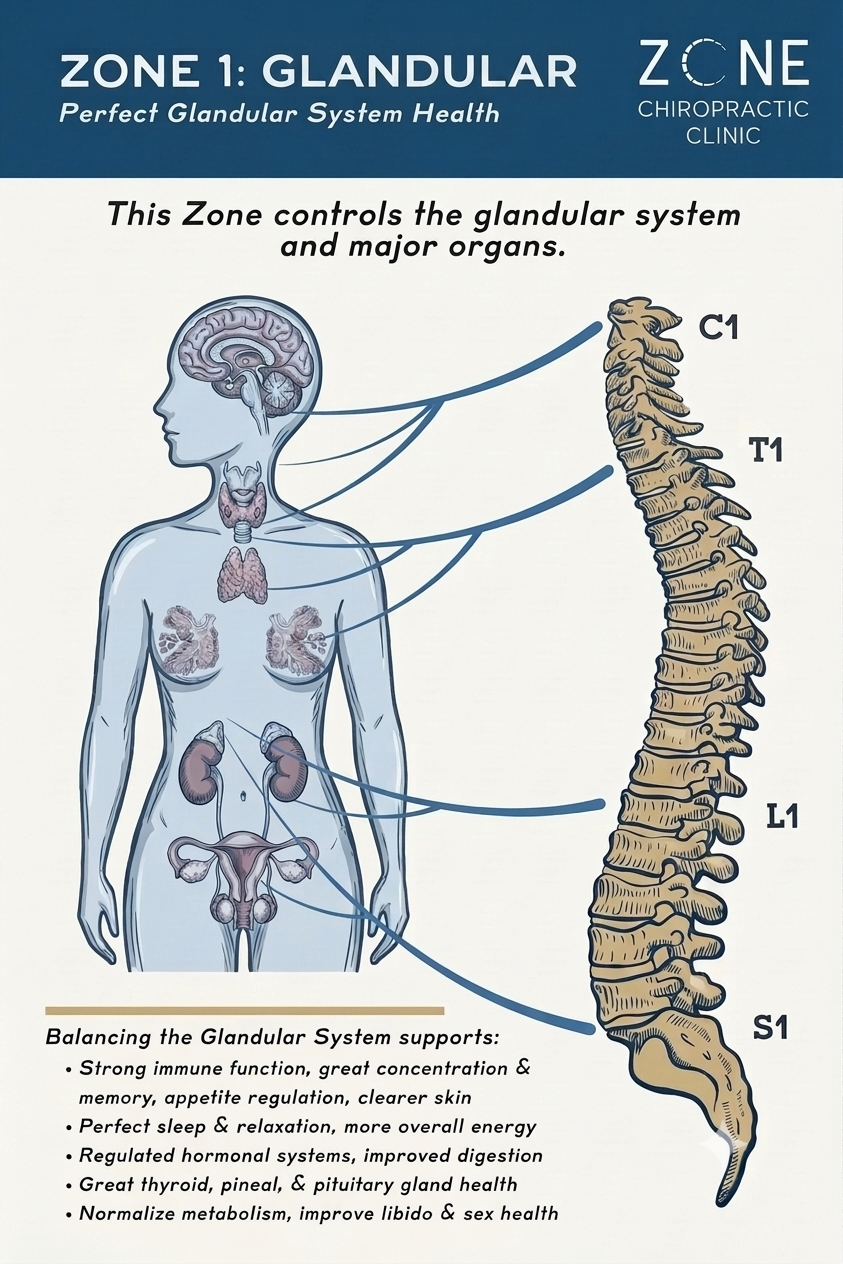
Zone 1 — Glandular
This zone connects to the body's hormone-producing glands, including the thyroid, pituitary, and adrenal glands. In the Zone Technique framework, this area is associated with energy, sleep, and stress response.
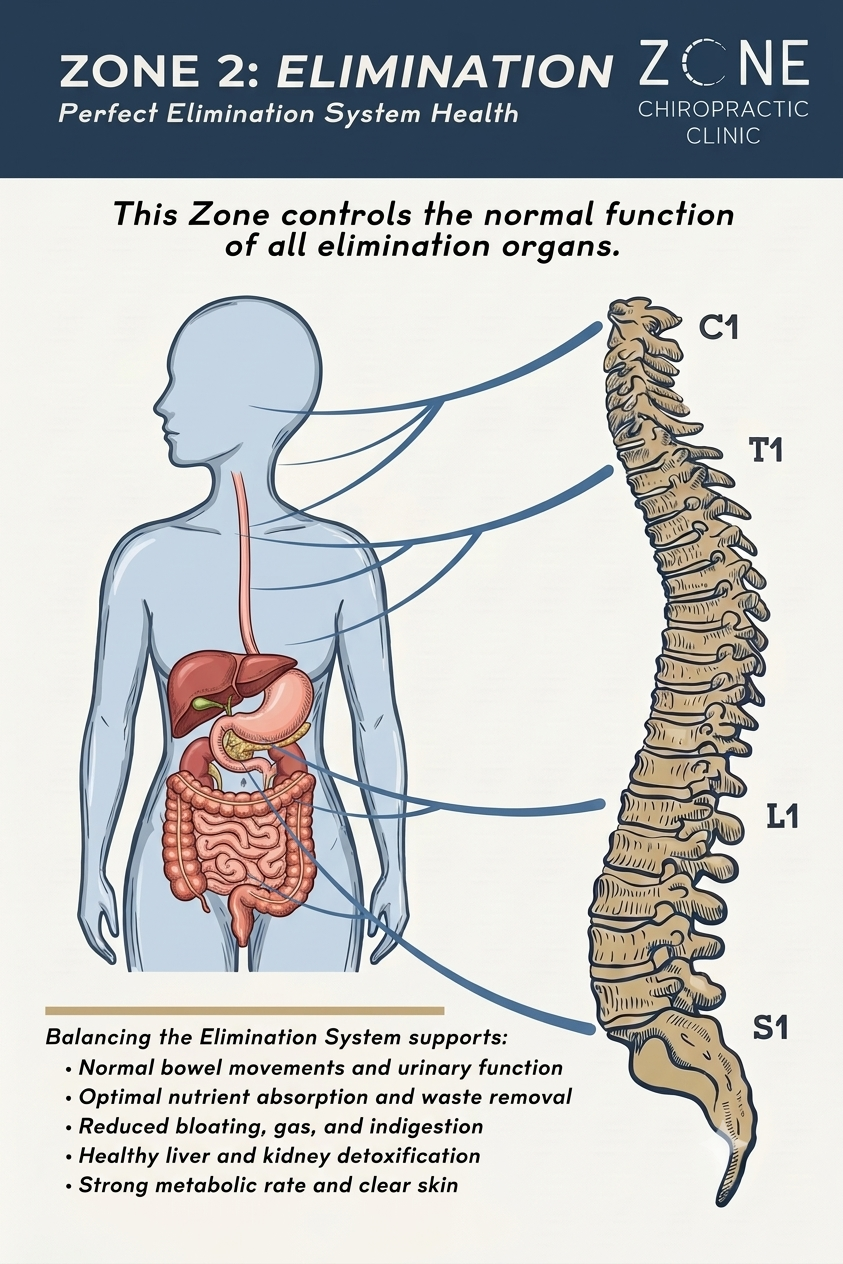
Zone 2 — Eliminative
This zone relates to the organs responsible for removing waste from the body, including the colon and kidneys. Practitioners associate it with digestive regularity and the body's natural detox processes.
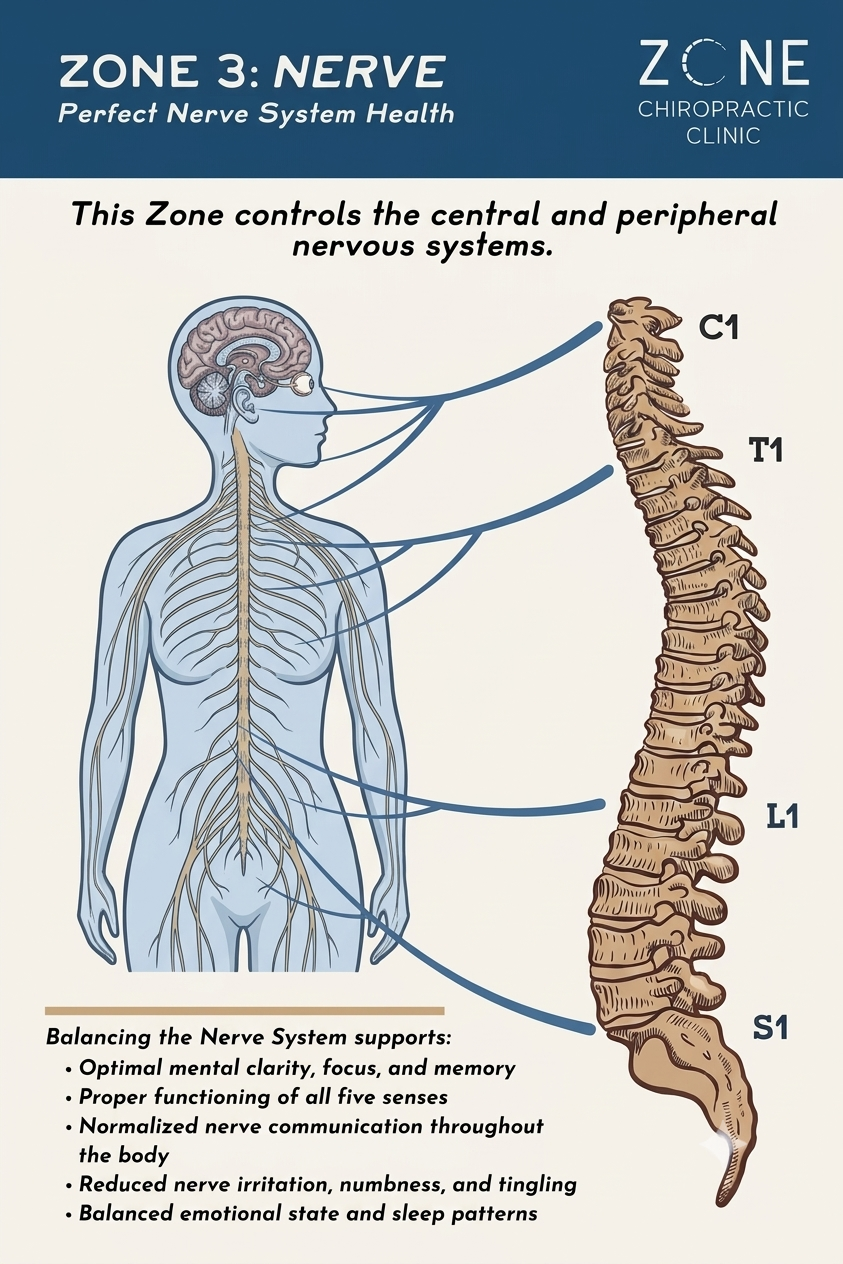
Zone 3 — Nervous
This zone covers the brain, spinal cord, and nervous system — the body's communication network. It's often connected to focus, sleep quality, and how the body responds to stress and tension.
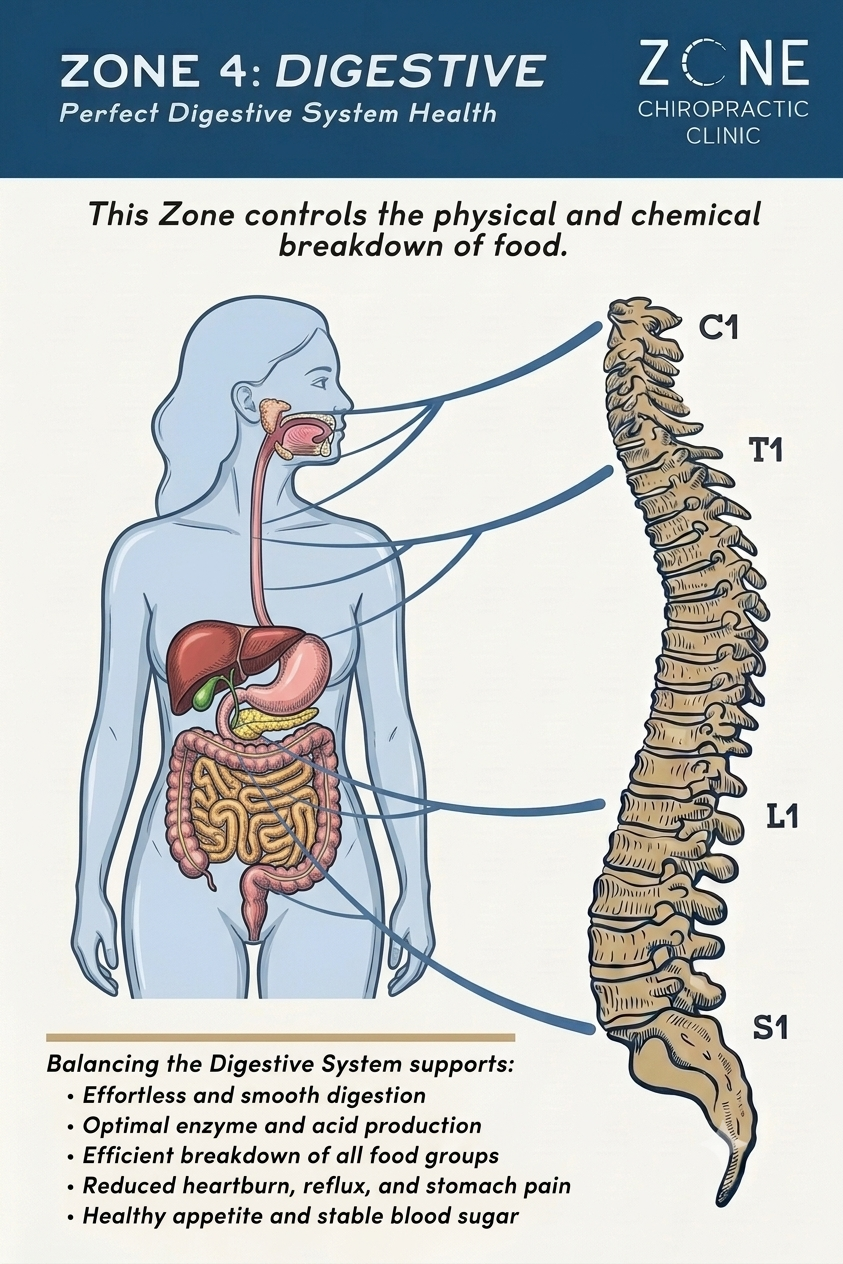
Zone 4 — Digestive
This zone relates to the stomach, liver, pancreas, and intestines. In the Zone Technique model, it's associated with digestive comfort and the body's ability to break down and absorb what you eat.
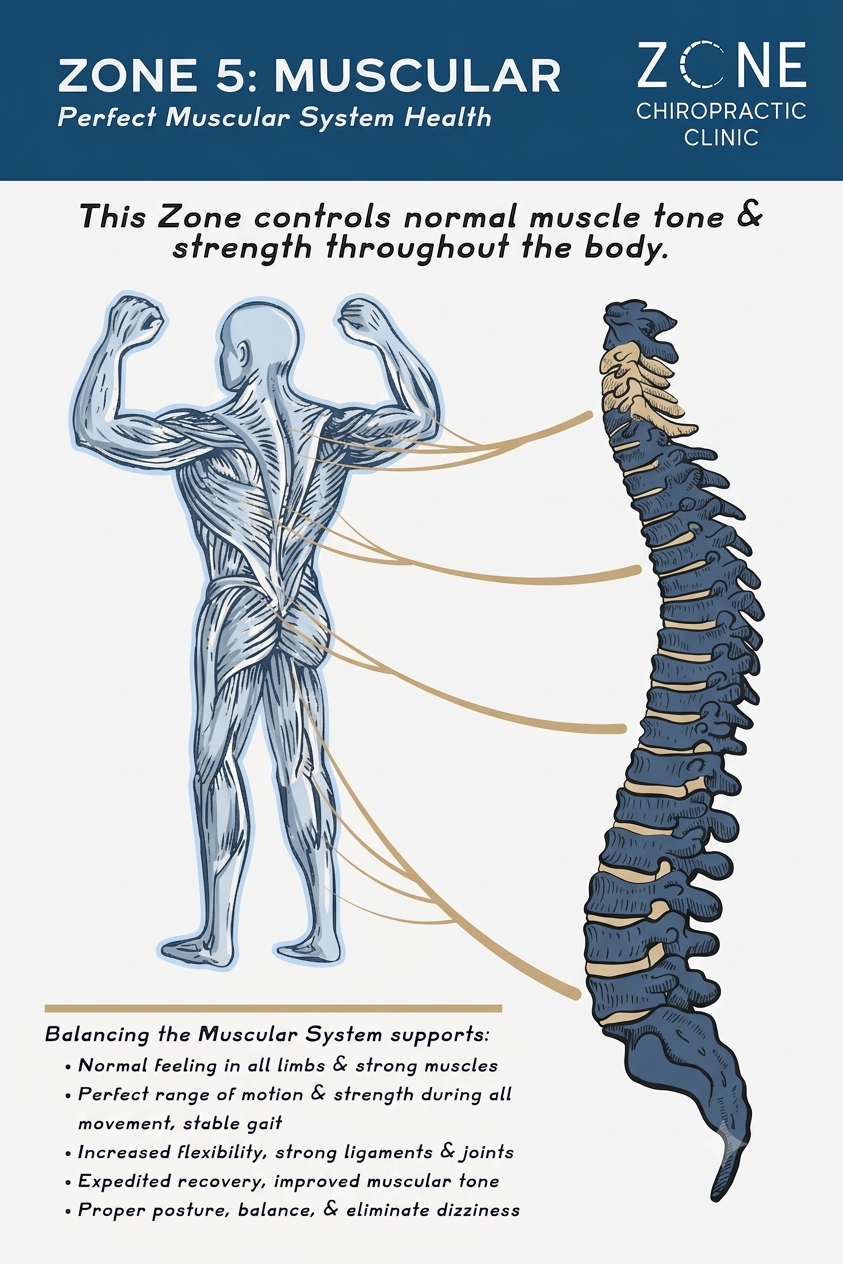
Zone 5 — Muscular
This zone covers the muscles, tendons, and ligaments — the area where chiropractic care has its clearest, best-established role. It's connected to mobility, posture, and recovery from everyday strain or activity.
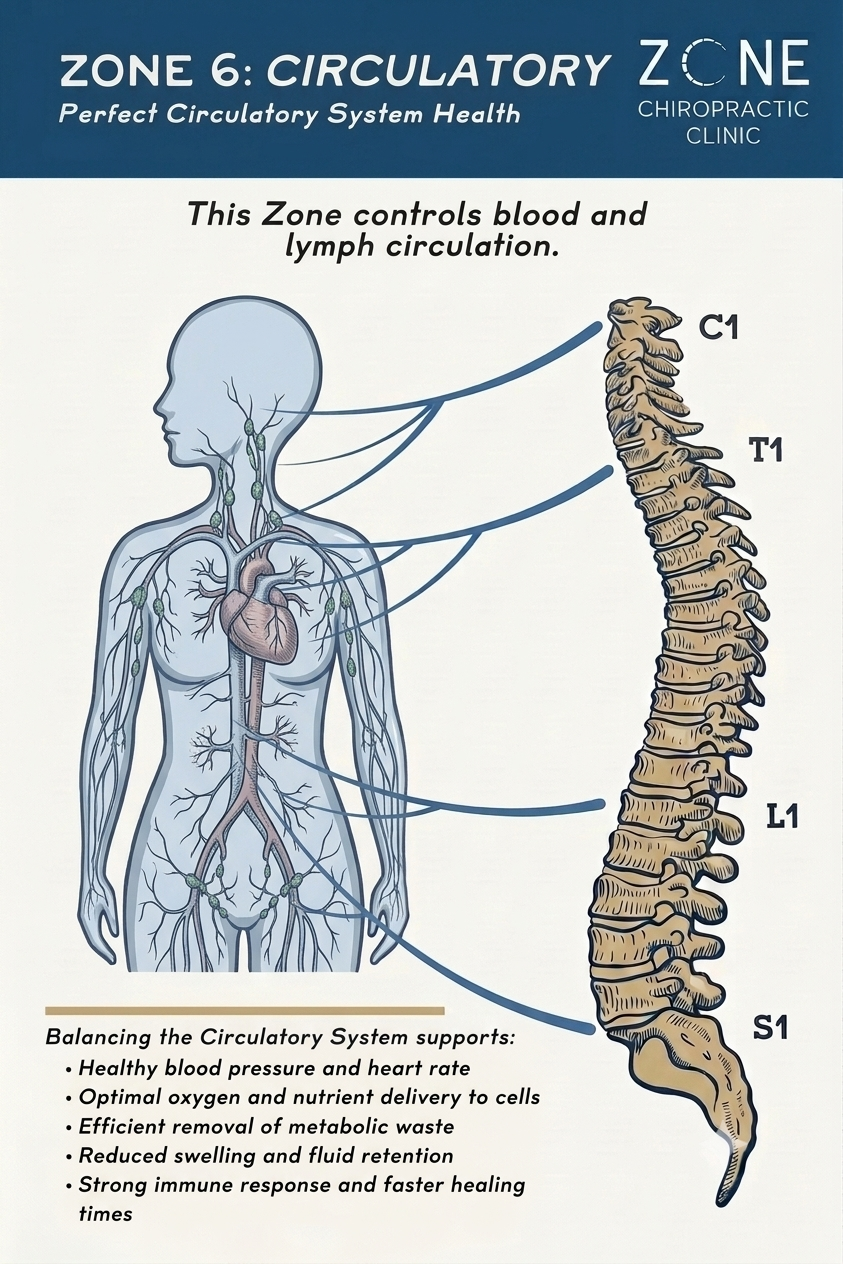
Zone 6 — Circulatory
This zone relates to the heart, blood vessels, and lymphatic system. Practitioners associate it with healthy circulation and the body's overall sense of vitality.
The zones above reflect the framework Dr. Myers is trained in through Zone Technique — not diagnosed conditions or guaranteed outcomes. Read the full disclaimer below.
Why Dr. Myers Offers Zone Technique
Dr. Myers trained in Zone Technique because it reflects how she already approached care — looking at the whole person, not just the symptom that brought them through the door. For her, it's another way to listen closely to what a patient's body is communicating, and to build a plan around that instead of defaulting to the same adjustment for every patient who walks in.
Frequently Asked Questions
A typical visit includes a conversation about your health and goals, a brief assessment at six points at the base of your skull, and a targeted adjustment based on what that assessment finds. The exact approach can vary depending on what you need that day.
Zone Technique is generally described as a gentle approach, though the specific sensation depends on the adjustment style used for that visit. Not every adjustment produces an audible pop — some do, many don't, and it isn't a measure of whether the visit worked.
This varies by person. Some patients notice a difference right after their first visit; others notice gradual change over several visits. It depends on what you're working with, how long it's been going on, and your overall health and activity level.
Dr. Myers may discuss these concerns within the Zone Technique framework as part of your overall care plan. That said, Zone Technique isn't a replacement for medical diagnosis or treatment — if you have an ongoing condition, please continue working with your physician alongside any chiropractic care.
Yes, when provided by a chiropractor trained to adapt care for those patients — which Dr. Myers is. If you're pregnant or bringing in a child, let her know at the start of the visit so she can tailor her approach appropriately.
Share your main concerns, any current diagnoses or medications, past injuries or surgeries, and whether you're pregnant. If you have osteoporosis, a bleeding or clotting condition, or a history of spinal issues, be sure to mention that specifically before treatment begins.
Zone Technique is a specialized chiropractic approach Dr. Myers is trained in. The zones and their associated focus areas reflect the framework she practices within — they're not a substitute for medical diagnosis or treatment. If you have a new, severe, or persistent symptom, or a condition your physician is already managing, please continue that care alongside any chiropractic visits. If you're experiencing a medical emergency, call 911 or go to your nearest emergency room.